- January 24, 2026
- quirkycraftech@gmail.com
- 0
Synergy Sports
Rohit Sharma Reflects on 2019 World Cup Heartbreak and the Mindset Shift That Redefined His Career
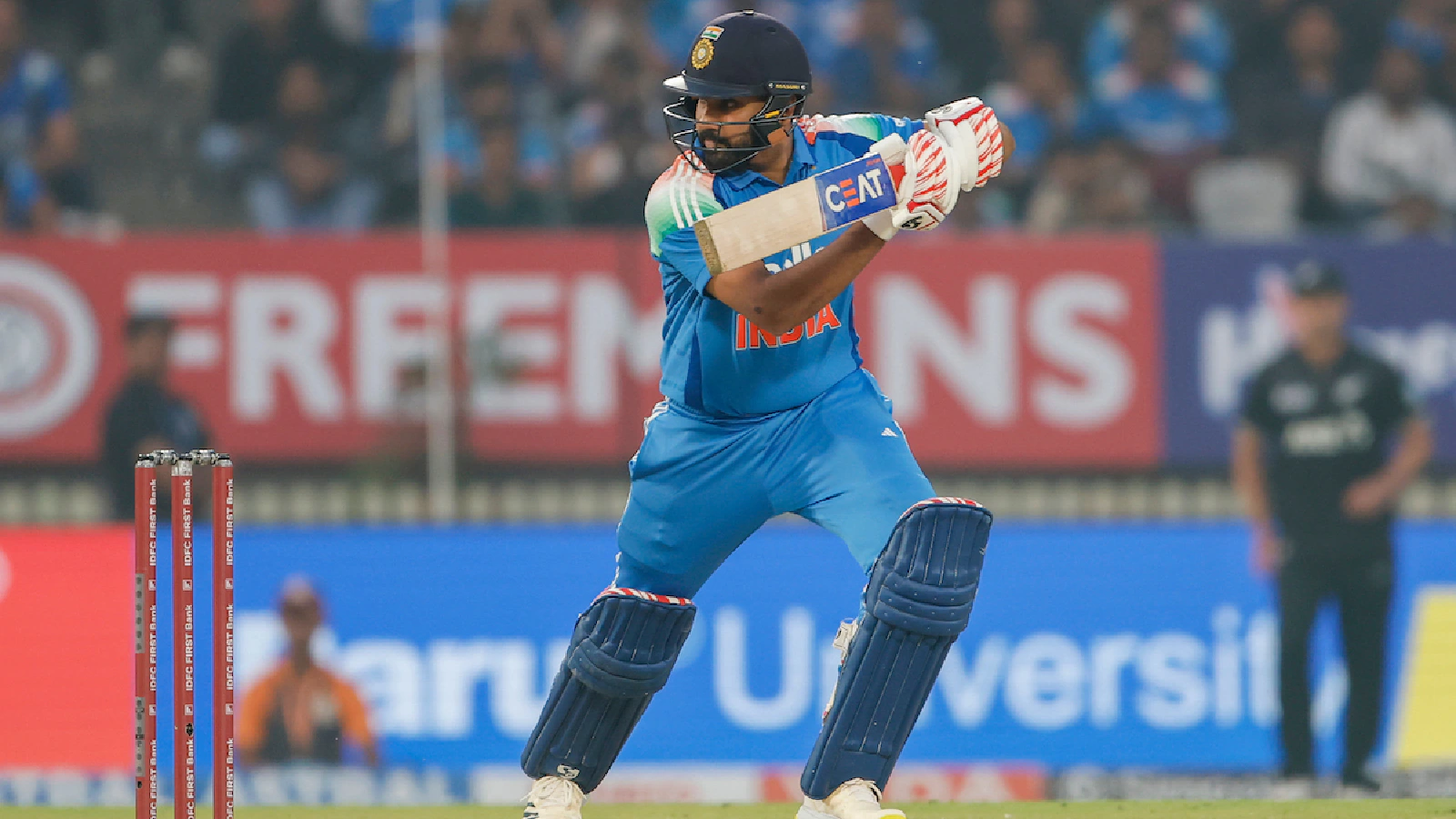
Mumbai: Former India captain Rohit Sharma has opened up about a defining psychological shift in his career that followed the heartbreak of the 2019 ODI World Cup, a tournament where personal glory failed to ease collective disappointment.
Despite enjoying a historic campaign in England — scoring 648 runs and a record five centuries — Rohit was left grappling with a sense of emptiness after India’s 18-run defeat to New Zealand in the semifinal. Reflecting on that loss, Rohit admitted the exit forced him to reassess what truly mattered as a batter and as a cricketer.
“The 2019 World Cup was a big lesson for me. I scored so many runs there, but we did not win the World Cup. So I asked myself, what is the use of this? What will I do with these runs?” Rohit said on JioHotstar’s ‘Captain Rohit Sharma’s Roadmap for T20 World Cup’ show.
“Yes, they remain in your statistics column, but for me, that was of no real use. That is when I decided that I would play for what makes me happy.”
A Defining Mental Shift
The realization marked a turning point in Rohit’s approach. He revealed that the mental transformation began in 2020 and took nearly two years to fully implement, eventually reshaping his fearless, intent-driven style that fans have since come to associate with him.
“That is why I started thinking differently in 2020. What I eventually implemented in 2022 and 2023 took me two years to adapt to,” he explained. “I realised I had to play with intent and without any fear. Otherwise, it does not matter how many times I got out in the 40s or 90s — it never bothered me at all.”
Changing India’s Cricket Culture
Rohit also spoke candidly about a major cultural shift he sought to introduce during his tenure as India’s captain. One of his key objectives, he said, was to break the team’s obsession with individual numbers and personal milestones, replacing it with a mindset centered on match situations and team success.
“India is a very stats-obsessed country. We love talking about stats,” Rohit said. “Even among players, it is often about ‘I scored so many runs, I did this, I did that.’ I had to take all of that out.”
According to Rohit, an overemphasis on averages and milestones often restricts players from taking bold decisions in crucial moments. His leadership philosophy aimed to empower players to take risks without fear of personal failure.
“Because at the end of the day, if you do not have a World Cup, all those stats do not matter,” he added. “What will you do after 20 or 25 years with those runs? What really matters is having successful campaigns and winning trophies. That defines your career.”
📩 Contact Synergy Sports
Call Us:
+91 83698 01752
+91 98196 58220
Email Us:
synergysportss7@gmail.com
rizvitaus@gmail.com
firdausmudassirofficial@gmail.com
Address:
Synergy Sports Pvt. Ltd, Galaxy Royale, S.V. Road,
Goregaon West, Mumbai – 400104, Maharashtra, India